
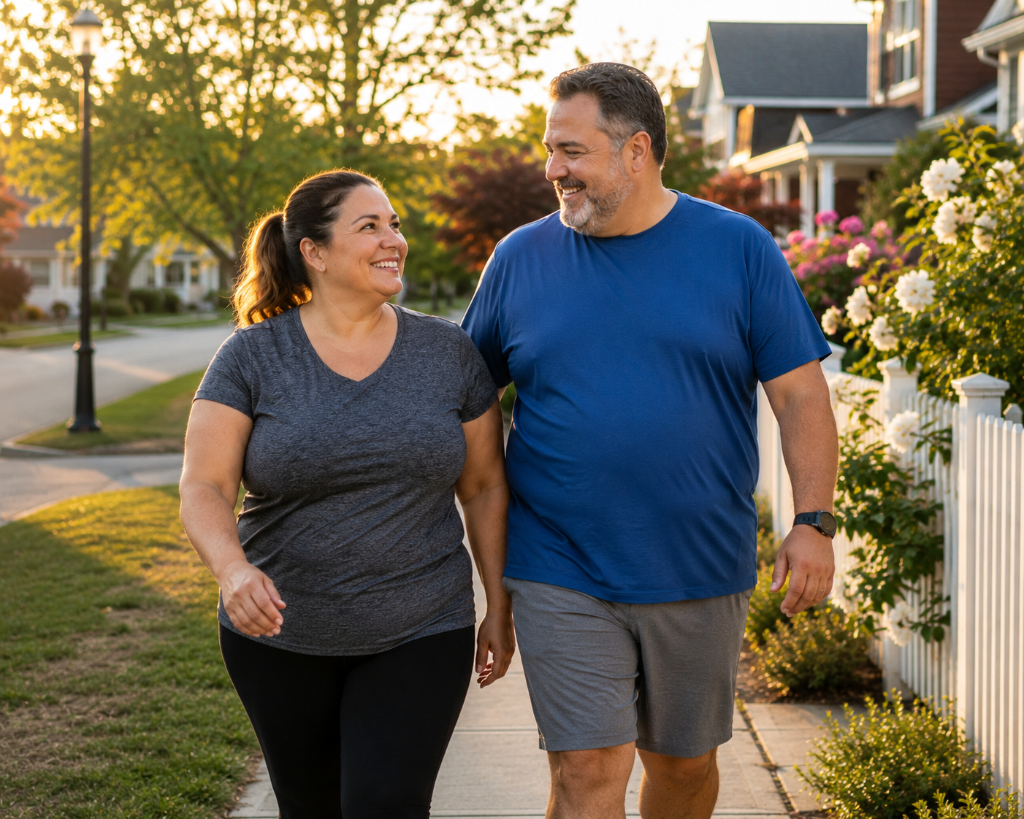
How to Perform
- 1
Wear comfortable, supportive shoes.
- 2
Start with a 5-minute slow warm-up walk.
- 3
Gradually increase your pace to a brisk walk.
- 4
Swing your arms naturally and keep your back straight.
- 5
Walk for 20–30 minutes at a steady, comfortable pace.
- 6
Cool down with a 5-minute slow walk.
- 7
Stretch your calves and thighs after completing your walk.
Common Mistakes to Avoid
- Walking too fast too soon — start slow and build up
- Skipping the warm-up and cool-down
- Not wearing proper footwear
- Forgetting to check blood sugar before long walks
For People with Diabetes:
Walking after meals is particularly effective for people with type 2 diabetes, as it can significantly reduce post-meal blood sugar spikes. Even a 10-minute walk after eating can lower glucose levels. Monitor your feet regularly for blisters or sores, especially if you have peripheral neuropathy.
Safety Tips
- •Check your blood sugar before and after walking
- •Carry a fast-acting carbohydrate in case of hypoglycemia
- •Walk after meals to help lower blood sugar
- •Start with 10-minute walks and gradually increase duration
aerobic
beginner
Walking
30 minutes
150 calories
multiple sets of 1-2 minutes each
Standard Parameters
20 minmoderate
Health Benefits
- Lowers blood sugar levels effectively
- Improves cardiovascular health
- No equipment needed
- Suitable for all fitness levels
- Reduces insulin resistance
Equipment Needed
- comfortable shoes
- treadmill (optional)
Target Muscles
quadriceps
hamstrings
calves
glutes